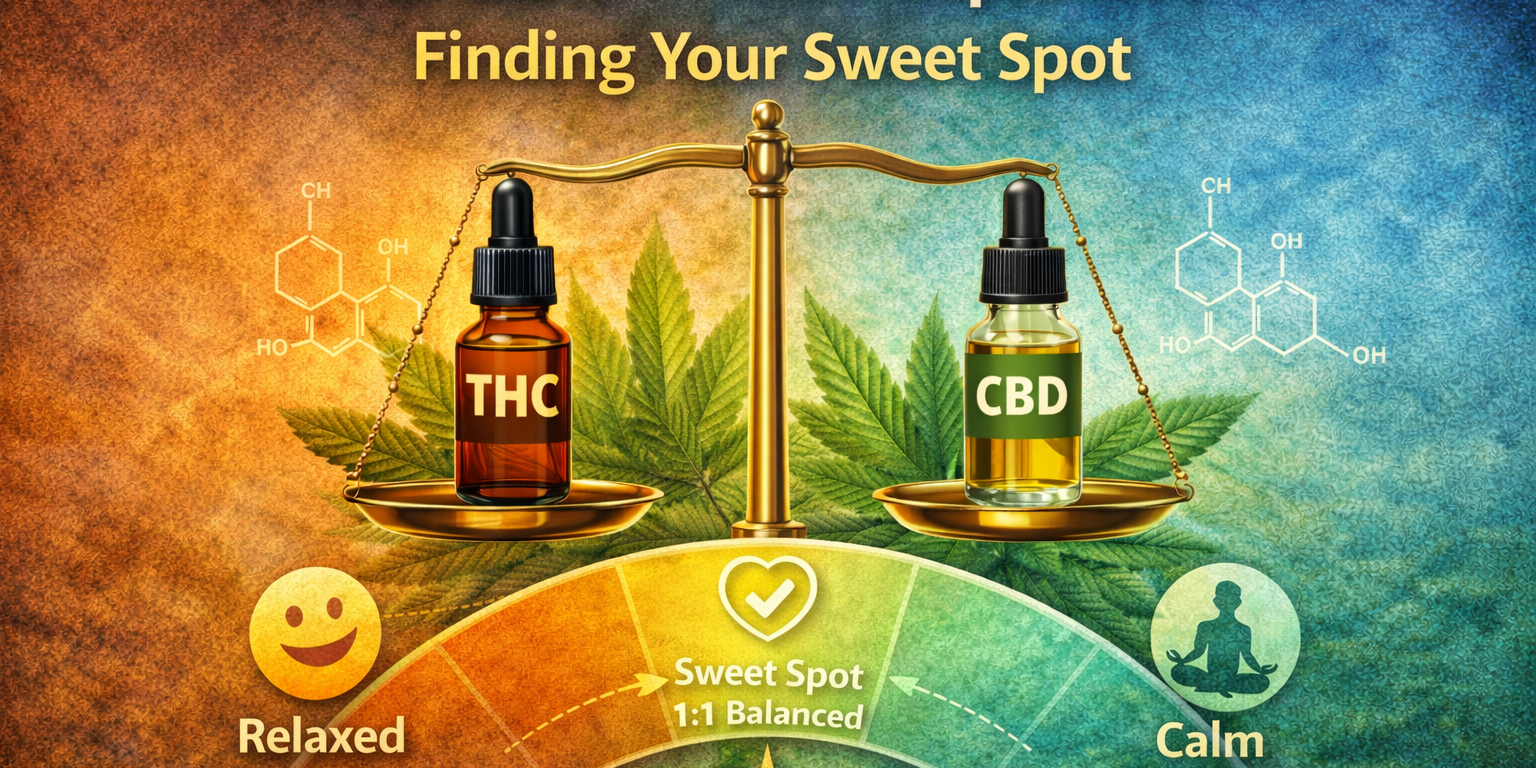
THC:CBD Ratios Explained – Finding Your Sweet Spot
Cannabis isn’t just about how much you consume—it’s about what balance you choose. Two people can use the same product and have completely different experiences, and the reason often comes down to one thing: THC:CBD ratios.
Finding your “sweet spot” means enjoying the benefits of cannabis without anxiety, overwhelm, or loss of control. Whether you’re new to cannabis or refining your preferences in Polokwane, understanding ratios is the key to a better, more intentional experience.
What Does a THC:CBD Ratio Mean?
A THC:CBD ratio shows the relationship between THC and CBD in a product—not the total strength.
Examples:
- 1:1 → Equal THC and CBD
- 2:1 → Slightly THC-dominant
- 5:1 → Strongly THC-dominant
- 1:5 → CBD-dominant
The ratio shapes:
- How intense the experience feels
- How clear or foggy your mind stays
- How likely anxiety is to appear
- Whether the effect feels uplifting, calming, or grounding
Ratios turn cannabis from a gamble into a guided experience.
Foundation read: THC vs CBD: What’s the Difference and Which Is Right for You?
Why Ratios Matter More Than THC Percentage
Many people focus only on THC percentage—but high THC without balance is where problems start.
CBD acts as a natural moderator:
- Softens THC’s intensity
- Reduces racing thoughts
- Helps keep the experience grounded
- Improves overall comfort
This is why balanced ratios are often described as smoother, calmer, and more enjoyable—especially for everyday use.
Common THC:CBD Ratios and How They Feel
1:1 – The Classic Sweet Spot
Best for: Beginners, anxiety-sensitive users, wellness-focused consumers
Experience:
- Gentle euphoria
- Clear mental state
- Body relaxation without heaviness
- Very low anxiety risk
This ratio is widely considered the most forgiving and versatile.
2:1 or 3:1 – Relaxed but Noticeable
Best for: Light recreational use, evening wind-down
Experience:
- More noticeable THC effects
- Relaxed body
- Mild mental uplift
- Still controlled and manageable
A great step up once you understand your tolerance.
5:1 or Higher (THC-Dominant)
Best for: Experienced users only
Experience:
- Strong psychoactive effects
- Deep relaxation or stimulation
- Higher risk of anxiety if overused
Not ideal for beginners or daytime use.
1:5 or Higher (CBD-Dominant)
Best for: Stress relief, clarity, daytime wellness
Experience:
- Calm and focused
- No intoxication
- Subtle physical ease
Perfect for professionals, athletes, and anyone avoiding a “high.”
Related guide: CBD for Stress, Sleep, and Everyday Wellness
How to Find Your Sweet Spot
Your ideal ratio depends on:
- Your tolerance
- Your mindset
- Time of day
- Your goal (relaxation, sleep, focus, recovery)
General Guidance
- New to THC? Start with 1:1 or CBD-dominant
- Occasional user? Try 2:1 or 3:1
- Experienced user? Explore higher THC ratios cautiously
Your sweet spot should feel:
- Comfortable
- Enjoyable
- Predictable
- Easy to repeat
If anxiety shows up, it’s usually a sign the ratio—not the plant—is off.
Must-read: How to Consume THC Responsibly as a Beginner
Why Ratios Are Crucial for Edibles
Edibles process THC through the liver, making effects:
- Stronger
- Longer-lasting
- Harder to reverse
Balanced ratios dramatically reduce the risk of:
- Overconsumption
- Panic or discomfort
- Being “too high for too long”
Deep dive: Water-Based vs Oil-Based Edibles: Which Is Better for THC Absorption?
Balanced Cannabis Use in Polokwane
As cannabis culture grows in Polokwane and Limpopo, the focus is shifting from potency to precision.
Educated consumers don’t chase strength—they chase balance, intention, and consistency. Ratios are how you get there.
Final Thoughts
Your sweet spot isn’t about chasing a high—it’s about finding alignment.
When THC and CBD work together in the right ratio:
- Anxiety fades
- Enjoyment improves
- Control stays with you
Cannabis should enhance your life, not interrupt it.
Curious to experience cannabis the right way? Visit High There.
Balanced options. Educated guidance. A space where cannabis is approached with intention—not excess.