THC:CBD Ratios Explained – Finding Balance Without Anxiety
For many people, the idea of THC comes with mixed emotions. Curiosity on one side, anxiety on the other. The good news? Cannabis doesn’t have to be overwhelming.
One of the most effective ways to enjoy the benefits of THC without unwanted anxiety is by understanding THC:CBD ratios. These ratios play a major role in how cannabis feels, how intense it becomes, and how suitable it is for beginners or wellness-focused users.
If you’re exploring cannabis in Polokwane, this guide will help you find the balance that works for your body and mind.
What Is a THC:CBD Ratio?
A THC:CBD ratio tells you how much THC there is compared to CBD in a product.
For example:
-
- 1:1 means equal parts THC and CBD
- 2:1 means more THC than CBD
- 1:5 means much more CBD than THC
These ratios directly influence:
-
- Intensity of the high
- Risk of anxiety or paranoia
- Clarity vs sedation
- Suitability for beginners
Understanding ratios transforms cannabis from guesswork into precision.
Start here: THC vs CBD: What’s the Difference and Which Is Right for You?
Why CBD Helps Reduce THC Anxiety
CBD doesn’t cancel THC—it balances it.
CBD can:
-
- Moderate THC’s psychoactive effects
- Reduce racing thoughts
- Promote calm and clarity
- Smooth out the overall experience
This is why many people who experience anxiety with THC alone find relief by choosing balanced or CBD-dominant ratios.
Common THC:CBD Ratios Explained
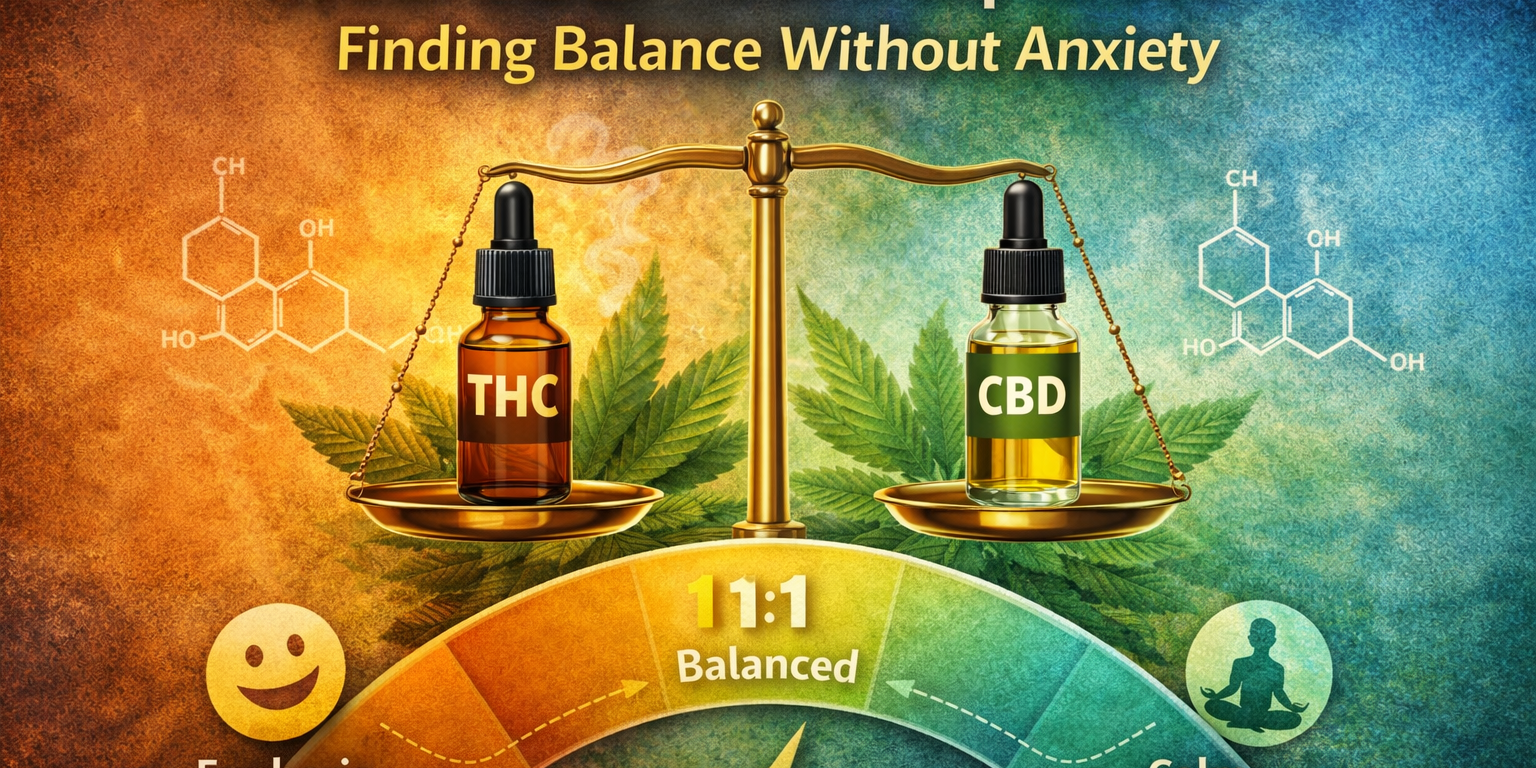
1:1 – The Balanced Experience
Best for: Beginners, anxiety-sensitive users, wellness use
What it feels like:
-
- Gentle relaxation
- Mild euphoria
- Clear headspace
- Minimal anxiety risk
This ratio is often called the “sweet spot”—you feel THC, but CBD keeps it grounded.
2:1 or 3:1 (THC-Dominant but Balanced)
Best for: Light recreational use, evening relaxation
What it feels like:
-
- Noticeable THC effects
- Relaxed body
- Slight mental uplift
- Still manageable and controlled
Ideal for those who want more effect without losing control.
5:1 or Higher THC Ratios
Best for: Experienced users
What it feels like:
-
- Strong psychoactive effects
- Deep relaxation or stimulation
- Higher risk of anxiety if misused
Not recommended for beginners or anyone prone to overthinking.
1:5 or Higher CBD Ratios
Best for: Daytime use, stress relief, clarity
What it feels like:
-
- Calm and focused
- No intoxication
- Subtle body relaxation
Perfect for professionals, athletes, and first-time cannabis explorers.
Read next: How to Consume THC Responsibly as a Beginner
Which Ratio Should You Choose?
Choose a Balanced Ratio if You:
-
- Are new to THC
- Want relaxation without paranoia
- Are sensitive to strong effects
- Want control and predictability
Choose CBD-Dominant if You:
-
- Want wellness without a high
- Need to stay productive
- Experience anxiety easily
Choose THC-Dominant if You:
-
- Have prior experience
- Understand your tolerance
- Are consuming in a relaxed, safe setting
There is no “correct” ratio—only the right ratio for you.
Ratios Matter Even More for Edibles
Edibles metabolise THC differently, making effects:
-
- Stronger
- Longer-lasting
- Less predictable
Balanced THC:CBD ratios are especially important with edibles to prevent accidental overconsumption.
Helpful read: Water-Based vs Oil-Based Edibles: Which Is Better for THC Absorption?
Finding Your Personal Balance
The goal of cannabis isn’t intensity—it’s alignment.
When THC and CBD work together:
-
- The experience feels smoother
- Anxiety is reduced
- Enjoyment increases
- Control stays in your hands
Especially in growing cannabis communities like Polokwane, education is what separates mindful use from misuse.
Final Thoughts
THC doesn’t have to be overwhelming. CBD doesn’t have to be boring.
When used together in the right ratio, they create an experience that is:
-
- Calm
- Enjoyable
- Intentional
- Respectful of your limits
Cannabis works best when it works with you—not against you.
Curious to experience cannabis the right way? Visit High There.
Balanced options. Educated choices. A space where cannabis is approached with intention, not excess.